
Why You’re Still Exhausted (Even If You’re Sleeping 8 Hours)
If you’ve ever said, “I’m sleeping fine, but I’m still exhausted,” you’re not alone.
Most of us think rest equals sleep. We try to fix our fatigue by going to bed earlier, taking melatonin, or aiming for eight solid hours. But then we wake up and still feel foggy, irritable, or drained.
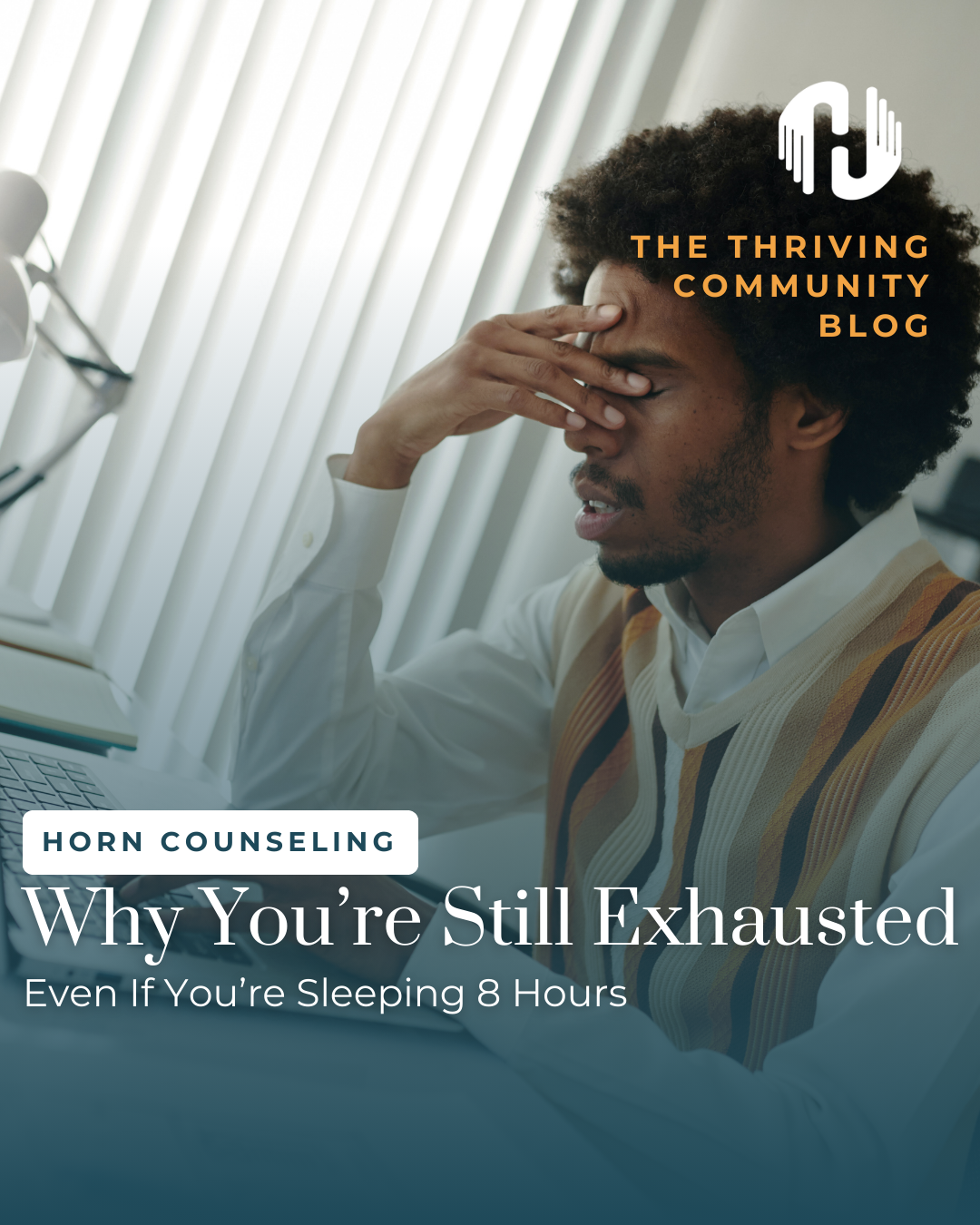
Here’s the truth: sleep and rest are not the same thing.
You can get enough sleep and still suffer from a rest deficit.
Many high-achieving professionals, parents, and leaders are chronically tired not because they aren’t sleeping, but because they are depleted in other areas of life. We’ve reduced rest to one category. But real restoration is broader than that.
If you want your energy back, you need the right kind of rest… not just more of it.
Let’s walk through the seven types of rest and how to recognize which one you’re missing.
Physical Rest: When Your Body’s Fuel Tank Is Empty
Physical rest is what most people think of first.
It includes sleep, naps, and simply lying down. But it also includes active physical rest like stretching, yoga, massage, walking, or gentle movement that restores instead of depletes.
Here’s what’s surprising: sometimes doing something light and restorative with your body actually increases energy more than collapsing on the couch.
Signs you may need physical rest:
• You feel clumsy, achy, or heavy.
• You’re relying on caffeine just to function.
• Your body feels tense even when you’re “relaxing.”
For many men, especially, the instinct is to push through physical fatigue. But your body often signals burnout before your emotions do.
Question to ask yourself:
When was the last time you rested your body without guilt?
Mental Rest: When Your Brain Won’t Shut Off
Mental exhaustion looks like this:
• You reread the same email three times.
• You can’t focus in meetings.
• Your thoughts race when your head hits the pillow.
Mental rest means giving your brain space to slow down.
That can be as simple as:
• Scheduling short breaks every 1–2 hours.
• Writing down tomorrow’s to-do list before bed.
• Practicing a few minutes of mindful breathing.
In therapy, we often talk about “externalizing” thoughts. When you put them on paper, they stop living only in your head.
If your mind never powers down, your nervous system never fully resets.
Ask yourself:
What thought keeps replaying that needs to be written down instead?
Emotional Rest: Freedom from “Holding It Together”
This one hits hard for high-functioning adults.
You’re the strong one.
The reliable one.
The one who doesn’t complain.
But inside, you’re exhausted.
Emotional rest is the ability to be honest about how you actually feel.
It might look like:
• Saying “I’m not okay” instead of “I’m fine.”
• Setting boundaries.
• Talking through what’s heavy instead of suppressing it.
Many people confuse emotional suppression with strength. But real strength includes authenticity.
If you’re constantly managing other people’s emotions while ignoring your own, you may not need more sleep… you may need emotional rest.
Ask yourself:
Where am I pretending to be fine?
Social Rest: Choosing Relationships That Refill You
Not all social time is equal.
Some interactions energize you.
Others drain you.
Social rest doesn’t always mean being alone. Sometimes it means being with the right people.
Signs you need social rest:
• You dread gatherings you used to enjoy.
• You feel lonely even in a crowd.
• You say yes to things you don’t actually want to do.
Social rest means:
• Spending more time with supportive people.
• Saying no more often.
• Prioritizing depth over quantity.
If you feel disconnected in your marriage or friendships, that may not be a “relationship failure.” It could be a rest imbalance.
Ask yourself:
Who fills my cup? Who empties it?
Sensory Rest: Quieting an Overstimulated Nervous System
We live in constant input.
Screens.
Notifications.
Noise.
Bright lights.
Zoom calls.
Your nervous system was not designed for nonstop stimulation.
Sensory rest can be surprisingly simple:
• Put your phone down while waiting in line.
• Dim the lights in the evening.
• Close your eyes for one minute.
• Take a walk without headphones.
Sometimes the healthiest thing you can do is allow yourself to be bored.
If your body feels “fried,” short-tempered, or edgy, you may be overloaded… not lazy.
Ask yourself:
How often do I allow silence?
Creative Rest: Reclaiming Awe and Inspiration
Creative rest isn’t just for artists.
If you solve problems, lead teams, parent kids, or make decisions all day, you’re using creative energy.
Signs of creative depletion:
• Feeling stuck.
• Cynicism.
• Loss of motivation.
• Lack of new ideas.
Creative rest comes from exposure to beauty and novelty.
Nature.
Art.
Music.
New environments.
Conversations that stretch you.
Awe restores perspective. It reminds you that your world is bigger than your inbox.
Ask yourself:
What makes me feel wonder?
Spiritual Rest: Reconnecting to Meaning
Spiritual rest is about connection and purpose.
It doesn’t require religious practice, though for some that’s part of it. It can also include:
• Volunteering.
• Being in nature.
• Reflecting on your values.
• Connecting to something bigger than your daily stressors.
When people feel aimless, cynical, or detached, they may not be physically tired—they may be spiritually depleted.
You were built for meaning. When that connection thins out, energy goes with it.
Ask yourself:
What makes me feel connected and grounded?
Rest Is an Investment, Not a Reward
Think of your energy like a bank account.
When you work, parent, lead, and show up for others, you’re making withdrawals.
Rest is how you make deposits.
The mistake we make is tying rest only to productivity. We tell ourselves we’ll rest after we finish everything. But the work never ends.
True rest is not laziness.
It’s maintenance.
It’s leadership.
It’s responsibility.
And it might feel uncomfortable at first, especially if you’re not used to slowing down.
A Better Question to Ask
Instead of asking:
Did I get enough sleep?
Start asking:
How am I doing, and what kind of rest do I need today?
Sometimes the answer is a nap.
Sometimes it’s a boundary.
Sometimes it’s silence.
Sometimes it’s a hard conversation.
The goal isn’t more hours in bed. It’s diversified restoration.
If you’re exhausted and can’t explain why, you may not have a sleep problem.
You may have a rest imbalance.
And that’s something we can work on.
At Horn Counseling, we help people identify where they’re depleted and build rhythms that actually restore energy and connection. If you’re feeling burned out, disconnected, or stuck, therapy can help you name the deficit and create change that lasts.
You don’t need to push harder.
You may just need a different kind of rest.
